
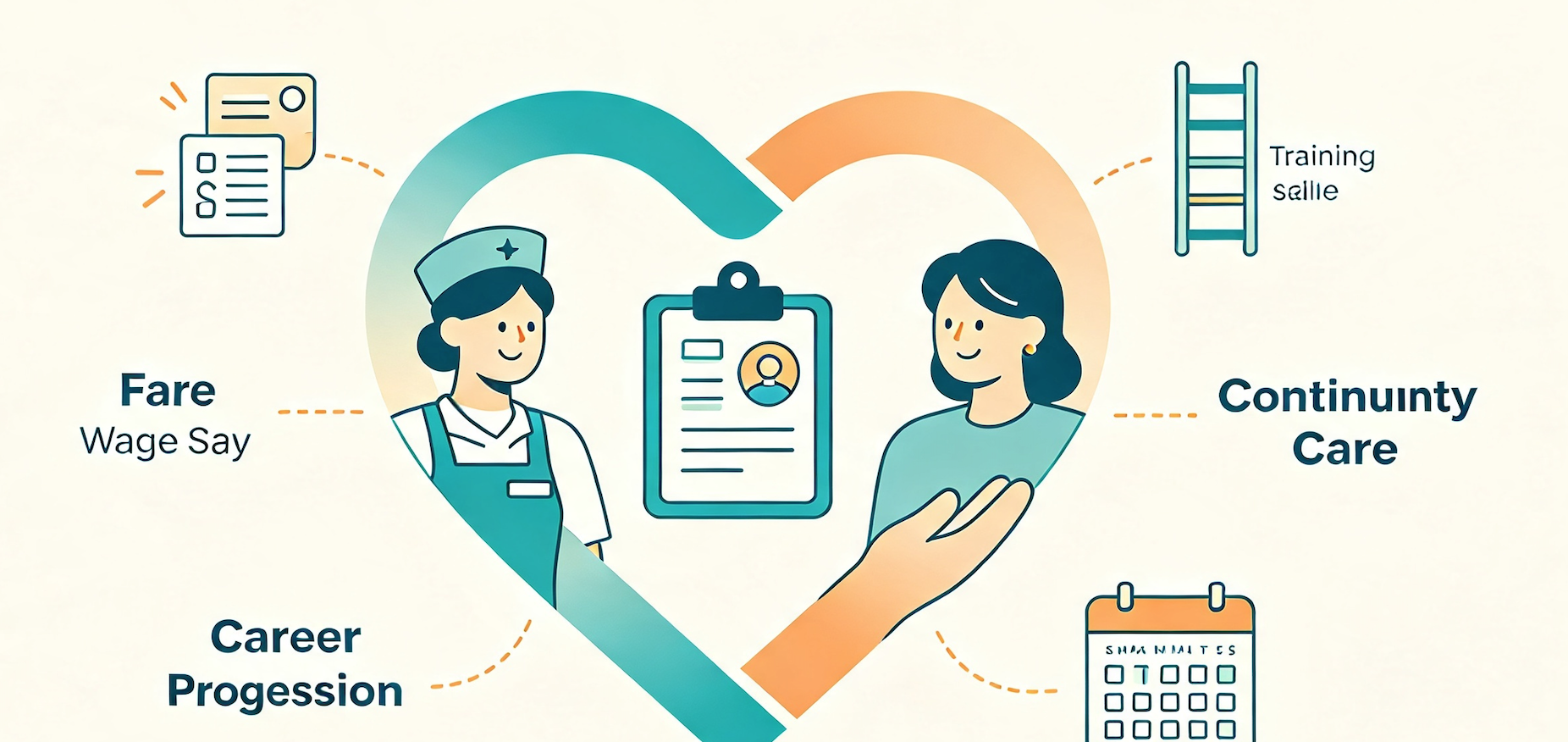
Fair Pay in Care: How It Helps Businesses,
Workers, and Clients Alike
By: Omawumi Bello
Published: Sept 28th, 2026
Care work is skilled, vital, and deeply important — yet it’s still too often undervalued and underpaid. The good news? Things are changing. The Fair Pay Agreement (FPA) is moving through Parliament, the Care Workforce Pathway is live, and CIPD data confirms pay is the number one reason people leave the sector.
Fair pay isn’t just “the right thing to do” — it’s the smart move that helps everyone.
The Cost of Not Paying Fairly
Right now, around 1 in 4 care staff leave every year. Replacing just one person costs £2,000–£4,000+ in recruitment, training, and lost time. CIPD research also shows financial stress affects work performance for nearly 4 in 10 lower-paid employees.
Put simply: paying less now costs you more later.
For Workers: Respect, Security, Real Growth
- Less worry, more focus: Pay that keeps up with living costs means less stress about bills — and more energy for the people you care for.
- Your voice matters: The new Adult Social Care Negotiating Body — backed by £500 million in government funding — gives staff a real say in setting pay and terms. First agreement due April 2028.
- Clear career steps: The Care Workforce Pathway (launched July 2026) maps out exactly how to progress — with better pay alongside new skills, not just promises.
- Fairness for all: Women make up 79% of the care workforce; fair pay helps close long-standing gaps.
For Employers: Stability, Savings, Stronger Teams
- Keep your best people: Fair pay cuts turnover — saving thousands on recruitment and expensive agency cover (which can cost 30–50% more than directly employed staff).
- Be the employer people choose to work for: A reputation for fair pay attracts better candidates — including those seeking sponsored roles.
- Stay ahead of change: The Fair Pay Agreement becomes law in April 2028. Phasing in fairer pay now means no sudden, costly shocks later.
- Happier teams = better business: Staff who feel valued show up more reliably, care more deeply, and stay longer.
For Clients: Consistency, Trust, Better Care
Every time a team member leaves, clients lose a familiar face and a trusted relationship.
Fair pay means:
- Fewer changes: A steady team builds real bonds and knows what each person needs
- Safer care: Experienced, consistent staff make fewer mistakes
- Real care, not just tasks: People who feel valued have the energy to truly listen and connect
What You Can Do Now
- Employers: Benchmark your pay against the Real Living Wage; map progression pathways; plan small, regular rises ahead of the 2028 deadline.
- Job Seekers: Ask about pay scales, progression, and training — a fair employer will be open about these from day one.
Final Thought
Fair pay isn’t about picking sides. It means:
✅ Businesses save money and grow stronger
✅ Workers feel respected, secure, and valued
✅ Clients get the steady, kind care they deserve
Change is coming — but the best organisations are already leading the way.
📌 Key References
- CIPD: Reward Management Survey 2026; Health & Wellbeing at Work 2025
- Fair Pay Agreement: Legislation in progress; implementation April 2028
- Care Workforce Pathway: Launched July 2026
- Department of Health & Social Care: £500m committed to sector pay reform

How to Recruit and Retain Good Care Workers
By: Omawumi Bello
Published: Aug 25th, 2026
From my experience, I have discovered that finding good care workers can be challenging and retaining them can be even harder.
For health and social care providers, having the right people in the right roles is about much more than filling vacancies. Good care workers bring compassion, reliability, professionalism and consistency to the people they support. When a care team is stable and well supported, it can have a positive impact on both the quality of care and the experience of those receiving it.
So, how can care providers attract good people—and create a workplace where they want to stay? I have put together my 10 secrets to attracting and retaining them.
1. Recruit for values, not just experience
Look beyond qualifications and previous experience. Look for compassion, patience, reliability and a genuine desire to support others.
2. Be clear about the role from the beginning
Give candidates an honest picture of the role, responsibilities and expectations. Transparency from the start helps build trust and reduces the risk of new employees finding the role different from what they expected.
3. Make your recruitment process welcoming
Good candidates are assessing you too. Keep communication professional and timely, make the process straightforward, and ensure candidates feel valued throughout.
4. Give new employees a strong start
A good induction helps new staff feel welcomed, prepared and confident. Make sure they understand their role, your expectations, key policies and where they can go for support.
5. Invest in training and development
Training should be more than a compliance exercise. Supporting employees to develop their skills and progress within your organisation can improve confidence, performance and long-term commitment.
6. Listen to your staff
I honestly cannot stress this enough. Give employees opportunities to share their experiences, concerns and ideas through supervision, one-to-ones or staff meetings. Most importantly, show that their feedback is heard and acted upon.
7. Recognise the contribution of your care workers
Care work can be demanding, so recognition matters. A simple thank you, positive feedback or acknowledgement of good work can help employees feel valued and appreciated.
8. Pay attention to wellbeing and workload
A supported workforce is essential to good care. Pay attention to workload, communication, working patterns and staff wellbeing, and take action when employees are struggling.
9. Build a positive workplace culture
People want to work where they feel respected, supported and treated fairly. Don't bitch about one staff to another staff. Strong leadership, good communication, teamwork and recognition all contribute to a workplace where people want to stay.
10. Understand why people leave
If staff are leaving, take the opportunity to understand why. Exit interviews and regular feedback can help identify patterns and highlight practical changes that could improve employee retention.
Sources & Further Reading:
- Skills for Care – Recruit to Retain
- Skills for Care – Retaining Your Workforce
- Skills for Care – Workforce Strategy for Adult Social Care in England
- Skills for Care – Care Workforce Pathway
- NHS Employers – Employee Recognition